


28 May All You Need to Know About Dry Needling Technique
It’s hard to miss the iconic scenes in classic kung fu movies where, following an intense fight, the sagely “doctor” or martial arts “master” would employ long, slender needles to seemingly perform miraculous healing on grievous injuries.
What you’re seeing is a cinematic exaggeration of the body’s energy pathways and sensitive locations – concepts that form the foundation of acupuncture, the ancient practice from which dry needling may have evolved.
Today, dry needling is a technique practiced by chiropractors and other healthcare professionals, focusing precisely on musculoskeletal trigger points that are rooted from contemporary Western anatomical and physiological knowledge.
It shares a fascinating, albeit distant, lineage with those dramatic healing scenes and the broader tradition of acupuncture depicted in those memorable kung fu films.
So, let’s get to the point of this article and explore dry needling further!
Understanding the Neuro-Musculoskeletal Basis of Dry Needling
The term “dry needling” might have crossed your path, sparking a bit of curiosity, perhaps even a moment of hesitation upon first hearing it.
Despite its somewhat clinical-sounding name, dry needling is actually a readily available and increasingly popular therapeutic approach for individuals grappling with mobility issues, discomfort, and neuro-musculoskeletal issues stemming from muscles, ligaments, or tendons.
The Mechanism of Action
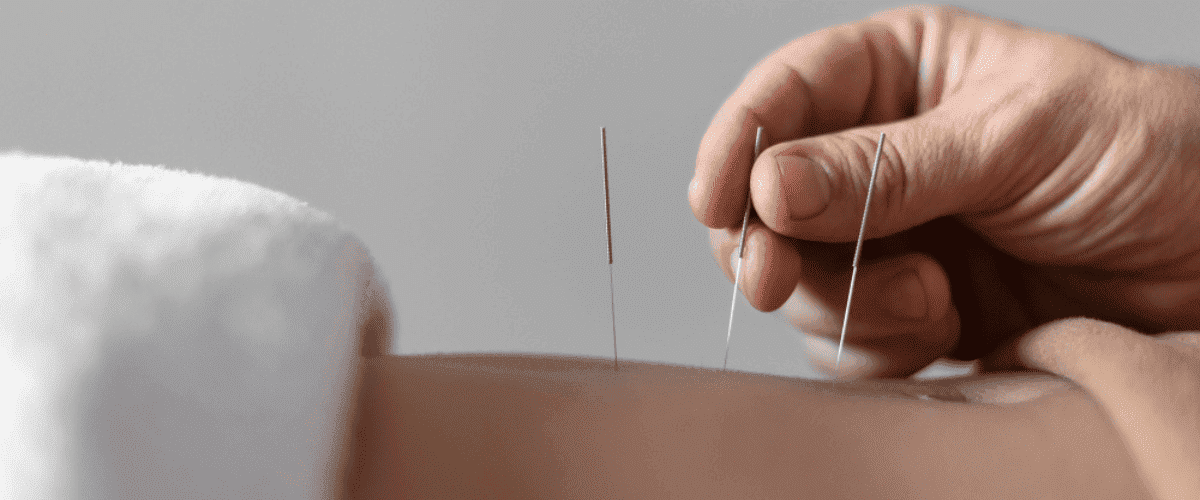
It’s a technique that involves the insertion of thin, solid filament needles into trigger points – hyperirritable spots within taut bands of skeletal muscle – as well as other myofascial tissues.
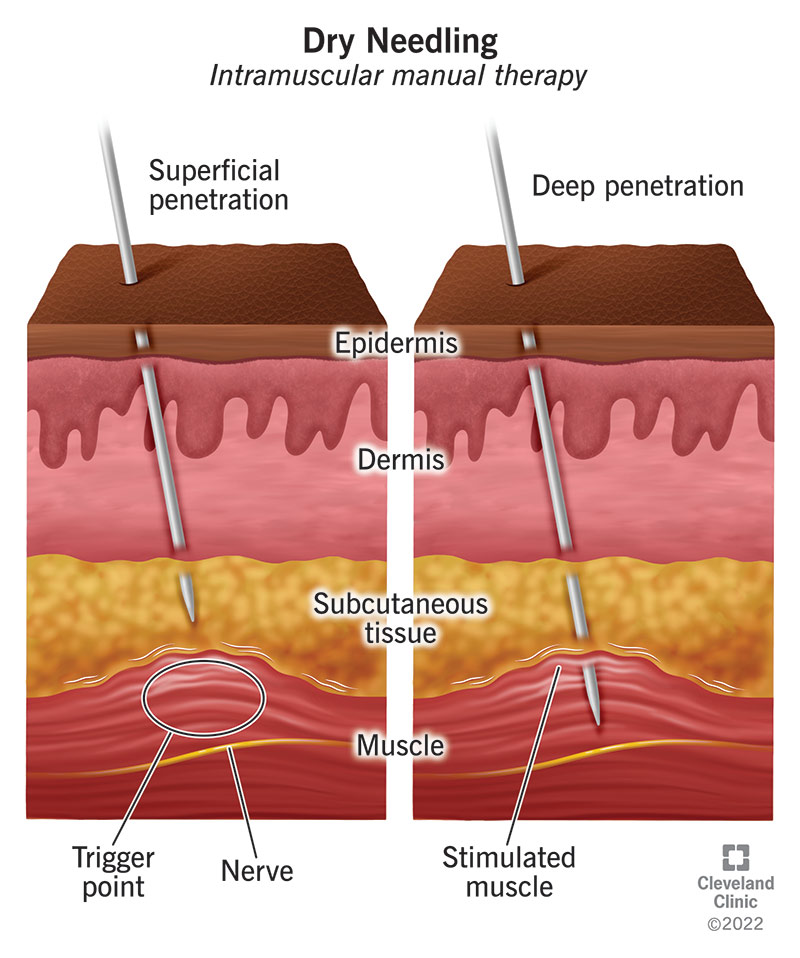
The image above might look a tad daunting or or even suggest a painful experience for some at first glance. However, it’s important to know that the sensation of dry needling is quite unlike an injection.
It’s believed that dry needling’s therapeutic benefits stem from several key physiological responses within the body such as having:
- Mechanical effects like relaxing contracted muscle fibers within a trigger point and easing muscle tension.
- Those subtle, prickly sensations you might feel during dry needling can surprisingly trigger a fascinating biochemical effect, stimulating nerve fibers to release your body’s own natural pain relievers – endorphins. It’s like flipping a switch that activates your internal pharmacy!
Dry needling also contributes to neurological effects at multiple levels where it stimulates mechanoreceptors (sensory receptors that respond to touch and pressure), modulating pain signals.
Additionally, it can affect the autonomic nervous system, potentially reducing sympathetic nervous system activity associated with chronic pain and muscle tension [1].
The Types of Dry Needling Techniques
When you go for a dry needling session with your practitioner, they may employ different techniques based on their clinical judgement and cater them to your specific needs.
Although the fundamental principle of dry needling remains the same, their functions and target areas varies from one another:
| Technique | Description | Potential Chiropractic Benefit |
| Superficial Dry Needling | Insertion of the needle into the superficial subcutaneous tissue, often used for pain modulation and autonomic nervous system effects. | May help reduce superficial pain sensitivity and muscle guarding, preparing the area for further chiropractic interventions. |
| Deep Dry Needling | Insertion of the needle deeper into the muscle belly, targeting trigger points and deeper fascial restrictions. | Directly addresses muscle hypertonicity and trigger points that may be limiting joint movement and contributing to pain patterns addressed by chiropractic. |
| In-and-Out Technique (Pistoning) | Rapid insertion and withdrawal of the needle, aiming to stimulate mechanoreceptors and disrupt trigger point activity. | Can provide a quick stimulus to reduce muscle spasm and pain, potentially improving immediate range of motion before or after an adjustment. |
| Non-Trigger Point Dry Needling | Insertion of needles into areas adjacent to trigger points, focusing on affecting surrounding tissues and pain pathways. | May be used to address referred pain patterns and broader areas of muscle tension that contribute to the patient’s overall presentation. |
The choice of technique will usually depend on your practitioner’s assessment of the patient’s condition and treatment goals.
Did you know that children of all ages can also benefit from chiropractic adjustments? Check out the benefits it brings in this article: Benefits of Paediatric Chiropractic Care For Children.
Clinical Applications of Dry Needling in Chiropractic Practice
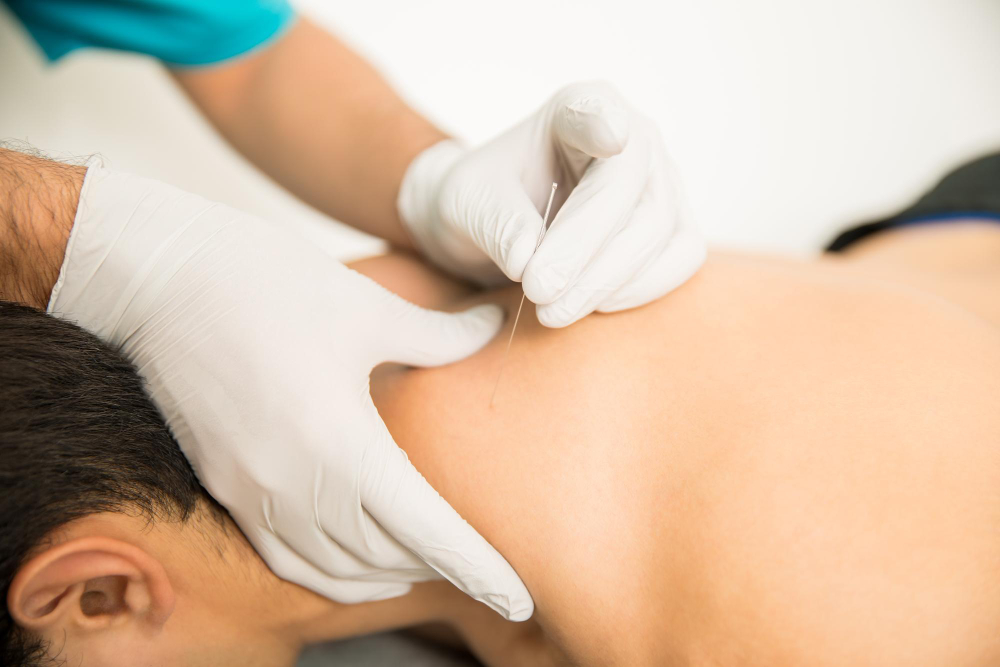
Individuals experiencing the following issues can benefit from dry needling:
- Muscle tension
- Restricted range of motion
- Spinal issues
- Musculoskeletal conditions (e.g. shoulder pain, rotator cuff pain, biceps tendinitis, iliotibial band syndrome, Achilles tendinitis, low back pain, tennis elbow, whiplash or neck pain, headaches, muscle strains, hip pain and temporomandibular pain (TMJ))
- Postherpetic neuralgia, a complication of shingles [2]
- Sports injuries (e.g. muscle strains, ligament sprains, and delayed onset muscle soreness (DOMS))
Although the process is generally safe, there are certain categories in which dry needling may not be appropriate. The contraindications may include:
- Trypanophobia (fear of needles)
- Pregnant individuals
- Individuals with compromised immune system as there is a risk of infection
- Individuals with open wounds or local skin infections
- Individuals who have just undergone surgery
- Individuals who have bleeding disorders or are on blood thinners
Prior to receiving dry needling technique, a thorough patient history and assessment is crucial to determine if it is a suitable treatment option for you.
Integrating Dry Needling into Your Chiropractic Treatment Plan
Dry needling showed to be more effective when compared with other therapies in both women and men, without differences by sex.
In recent years, several research pertaining to the combination of chiropractic treatments and dry needling to address lower back pain and chronic neck pain [3] has been effective in both women and men compared to other therapies.

Interestingly, the benefits of dry needling aren’t limited to combined therapy; it can also be a valuable standalone option for those without access to chiropractic services or who prefer it as an independent treatment.
This ability to be effective both in conjunction with other therapies and on its own highlights the adaptable nature of dry needling as a therapeutic tool.
In a situation where an individual experiences chronic lower back pain and restricted lumbar flexion. Your practitioner might:
- Perform a chiropractic adjustment to address any joint restrictions in the lumbar spine and pelvis.
- Utilise dry needling to target hypertonic muscles in the paraspinals, quadratus lumborum, and gluteal region, releasing trigger points contributing to pain and stiffness.
- Prescribe rehabilitative exercises to strengthen core muscles and improve your postural stability.
In this scenario, dry needling technique complements the adjustment by addressing soft tissue restrictions that may limit the effectiveness and longevity of the chiropractic manipulation.
Disclaimer: This information is for general knowledge and comparison purposes only. It does not constitute medical advice. Consult with qualified medical professionals if you are experiencing body pain.
What to Expect from Dry Needling
Understanding the process can help alleviate your anxiety and be more prepared before your dry needling session. Let’s dive into it!
Pre-Treatment Assessment
Before the treatment, your practitioner will conduct a thorough assessment, including a review of your medical history, a physical examination, and a discussion of your symptoms to determine if dry needling is appropriate and to identify target areas.
Once they’ve confirmed that you’re a suitable candidate, your practitioner will explain how the treatment works and answer any questions you may have.
For your dry needling appointment, it’s best to wear comfortable, loose-fitting clothing to allow your practitioner easy access to the area being treated. If that’s not possible, your provider will ensure your comfort and modesty with a gown or appropriate covering.
During the Procedure
During the treatment, you will be positioned comfortably on a chiropractic table where your practitioner will use thin, sterile, single-use needles.
The insertion of the needle is often painless or may feel like a slight prick. Once the needle is in the target tissue, you may experience a localised twitch response or a brief cramping sensation which is a normal and often therapeutic response.
The needles are typically left in place for a few seconds to a few minutes, depending on the technique and the area being treated. The number of needles used will vary based on your individual needs.
After the Procedure
It’s common to experience some mild soreness, stiffness, or bruising in the treated area for a few hours or up to 24-48 hours after dry needling as this is a normal response of your body healing.
Measures for Your Comfort:
- Stay Hydrated: Drinking plenty of water can help flush out any metabolic byproducts released during the treatment.
- Gentle Movement: Light stretching and movement can help reduce soreness.
- Heat or Ice: Applying heat or ice to the treated area can provide comfort.
- Avoid Strenuous Activity: Refrain from intense exercise for the rest of the day.
It’s also common to feel slightly tired or fatigued after a dry needling session as the body works to restore balance. This is usually temporary and subsides within a day or two.
The Difference Between Dry Needling & Acupuncture
Aren’t acupuncture and dry needling the same since these methods utilise needles? Surprisingly, they are different in many ways!
Although they do use the same type of needles, their differences lie more than just their techniques:
| Feature | Dry Needling | Acupuncture |
| Philosophy | Based on Western medicine principles, focusing on neuro-musculoskeletal conditions. | Rooted in Traditional Chinese Medicine (TCM), focusing on energy flow (Qi) along meridians. |
| Target Areas | Primarily trigger points, muscles, ligaments, and tendons. | Specific acupuncture points along meridians, often distal to the site of pain. |
| Goal | To reduce pain, improve muscle function, and restore movement. | To balance the flow of Qi and promote overall health and well-being. |
| Diagnosis | Based on musculoskeletal assessment and identification of trigger points. | Based on TCM diagnostic methods, including tongue and pulse diagnosis. |
In dry needling technique, qualified and experienced practitioners tap into their knowledge of anatomy, physiology, and biomechanics to target specific musculoskeletal tissues.
Relieve pain, improve posture, and reduce stress with the Alexander Technique. Discover if it’s the right solution for you in this article on: How effective is the Alexander Technique? Your Definitive Guide.
Find Relief in The Dynamic Duo of Chiropractic Care & Dry Needling
Backed with multiple research, the combination of chiropractic care and dry needling might just be the combo you need in addressing your neuro-musculoskeletal issues.
Experience this combined approach for a pain-free movement and feel the positive impact on your body with Sage Chiropractic!
Book an appointment with us today and find out how our team of qualified practitioners can help you!
Disclaimer: This article is for informational purposes only and does not replace professional medical advice. Consult with qualified medical professionals if you are experiencing body pain.
References
[1] Lázaro-Navas I, Lorenzo-Sánchez-Aguilera C, Pecos-Martín D, et al. Immediate Effects of Dry Needling on the Autonomic Nervous System and Mechanical Hyperalgesia: A Randomized Controlled Trial. Int J Environ Res Public Health. 2021;18(11):6018. Published 2021 Jun 3. doi:10.3390/ijerph18116018
[2] Cebeci D, Karasel S. Treatment Analysis of Patients Followed up With Postherpetic Neuralgia in Nothern Cyprus. Mater Sociomed. 2022;34(1):55-59. doi:10.5455/msm.2022.33.55-59
[3] Hernández-Secorún M, Abenia-Benedí H, Borrella-Andrés S, et al. Effectiveness of Dry Needling in Improving Pain and Function in Comparison with Other Techniques in Patients with Chronic Neck Pain: A Systematic Review and Meta-Analysis. Pain Res Manag. 2023;2023:1523834. Published 2023 Aug 23. doi:10.1155/2023/1523834
Read What Our Clients Say About Us!



Contact Sage for more information on AT and explore how we can help you.
Disclaimer: This article is for informational purposes only and does not replace professional medical advice. Consult with qualified medical professionals if you are experiencing body pain.

Related Articles

How effective is the Alexander Technique? Your Definitive Guide
Relieve pain, improve posture, and reduce stress with the Alexander Technique. Explore its effectiveness and discover if it's the right solution for you.
14 February, 2025
What is Neuro Emotional Technique (NET)? (And Does it Really Work)
In this article, we discuss how NET works, its effectiveness, the conditions it targets, whether it’s right for you, and how it compares to other therapies. Read to learn more!
04 March, 2025
Benefits of Paediatric Chiropractic Care For Children
Explore the benefits of paediatric chiropractic care to support your child’s posture, mobility, and overall health with gentle spinal adjustments.
04 April, 2025
What is Sacro-occipital Technique? A Complete Guide
Curious about the Sacro-occipital Technique (SOT)? This guide explains this gentle chiropractic approach and its potential for easing pain and discomfort.
02 May, 2025All You Need to Know About Dry Needling Technique
Explore the benefits of dry needling for pain relief and muscle tension. Learn more about this chiropractic technique and how it can help you feel better.
28 May, 2025
FAQs About Applied Kinesiology: Everything You Need to Know
Get answers to all your questions about Applied Kinesiology! Discover how this holistic approach can help identify imbalances and improve your well-being.
03 July, 2025


